

Imagine turning a rainy afternoon into a mini world cup—without leaving your living room. That’s the magic of a foosball table. Whether you call it table football, baby-foot, or simply “foos,” this game brings together quick reflexes, friendly banter, and just the right amount of chaos.
In this guide, we’ll explore the world of foosball tables from top to bottom—covering their history, types, playing techniques, buying tips, and even how to care for them. By the time you’re done reading, you’ll be ready to either shop for your perfect table or take your game to the next level.
A Brief History of Foosball
Before it became the center of game rooms and sports bars, foosball had humble beginnings. Its exact origins are debated—some credit Germany in the late 19th century, others point to France and Spain—but the concept was the same: a tabletop version of soccer.
The game gained momentum after World War II, spreading to the United States and becoming a social pastime. By the 1970s, foosball had its own tournaments, professional players, and standardized table designs.
Understanding the Parts of a Foosball Table
Knowing your table is like knowing the layout of a soccer field—it gives you an edge.
-
Cabinet – The main body, usually made of wood, MDF, or composite materials.
-
Playing Surface – The “field” with lines and sometimes ramps in the corners to keep the ball moving.
-
Rods – Metal or chrome-plated bars that players control.
-
Handles – Grips attached to the rods, designed for comfort and precision.
-
Men (or Players) – The miniature footballers, usually arranged in standard formations.
-
Goal Boxes – Where the ball lands when you score.
-
Legs & Levelers – Support the table and keep the field even.
Types of Foosball Tables
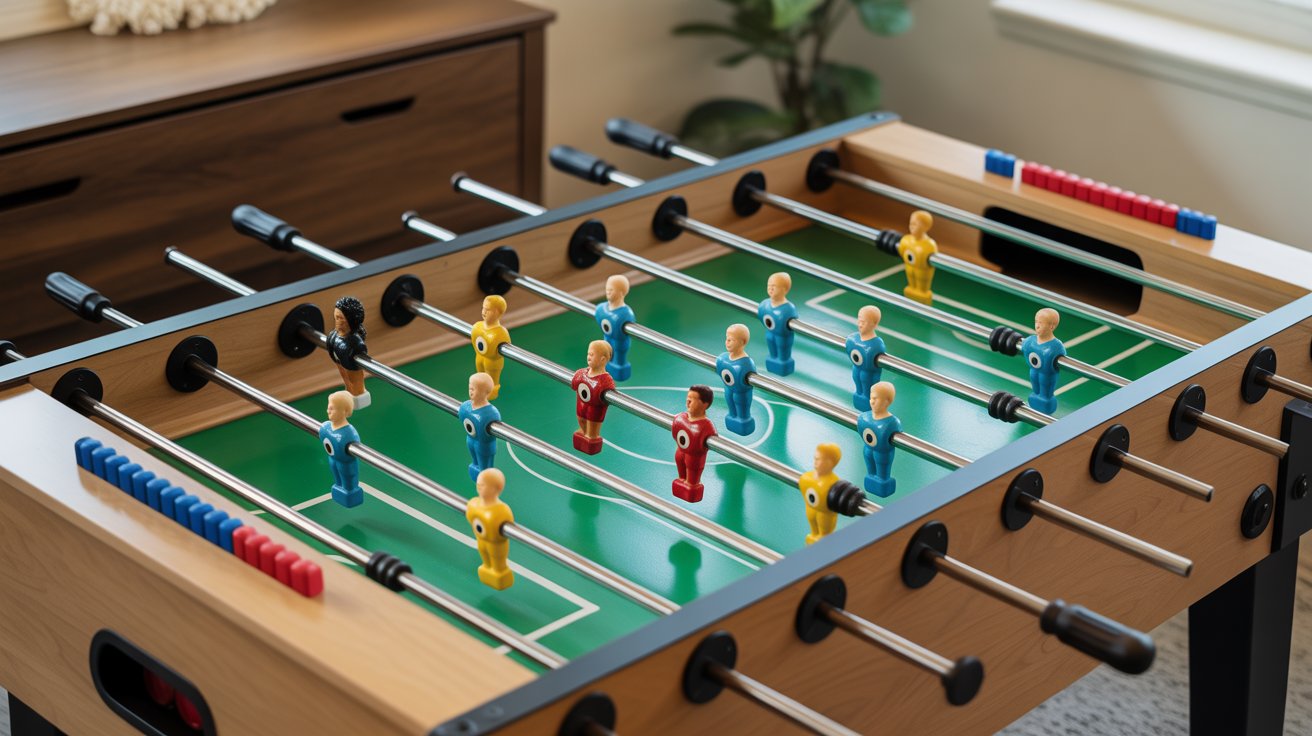
Just like cars, foosball tables come in different builds for different needs.
1. Standalone Tables
These are the full-sized models you find in arcades or professional settings. Built for durability, they’re heavier and more stable, making them ideal for serious play.
2. Tabletop Versions
Perfect for small apartments or casual play. They sit on existing surfaces and can be stored away easily.
3. Multi-Game Tables
For those who like variety, these tables combine foosball with pool, air hockey, or table tennis. Great for family game rooms.
4. Coin-Operated Tables
Common in bars and gaming venues, they feature a coin slot mechanism and are made to withstand heavy use.
Choosing the Right Size
Foosball tables aren’t one-size-fits-all. A regulation table measures about 56 inches long and 30 inches wide, requiring at least 7 feet by 8 feet of floor space for comfortable play. Smaller versions are available for kids or tighter spaces.
The Role of Materials in Performance
The material affects durability, ball speed, and weight.
-
Solid Wood – Long-lasting, stable, and classic-looking.
-
MDF (Medium Density Fiberboard) – Lighter and more affordable, though less durable.
-
Metal Components – Ideal for rods and bearings to ensure smooth play.
Rod Types and Why They Matter
Rods can make or break your playing experience.
-
Solid Rods – Stronger but heavier; require more effort to move quickly.
-
Hollow rods — lightweight for lightning-fast moves and smoother, more effortless control.
For beginners, hollow rods often provide a better experience due to less wrist strain.
Formations and Playing Styles
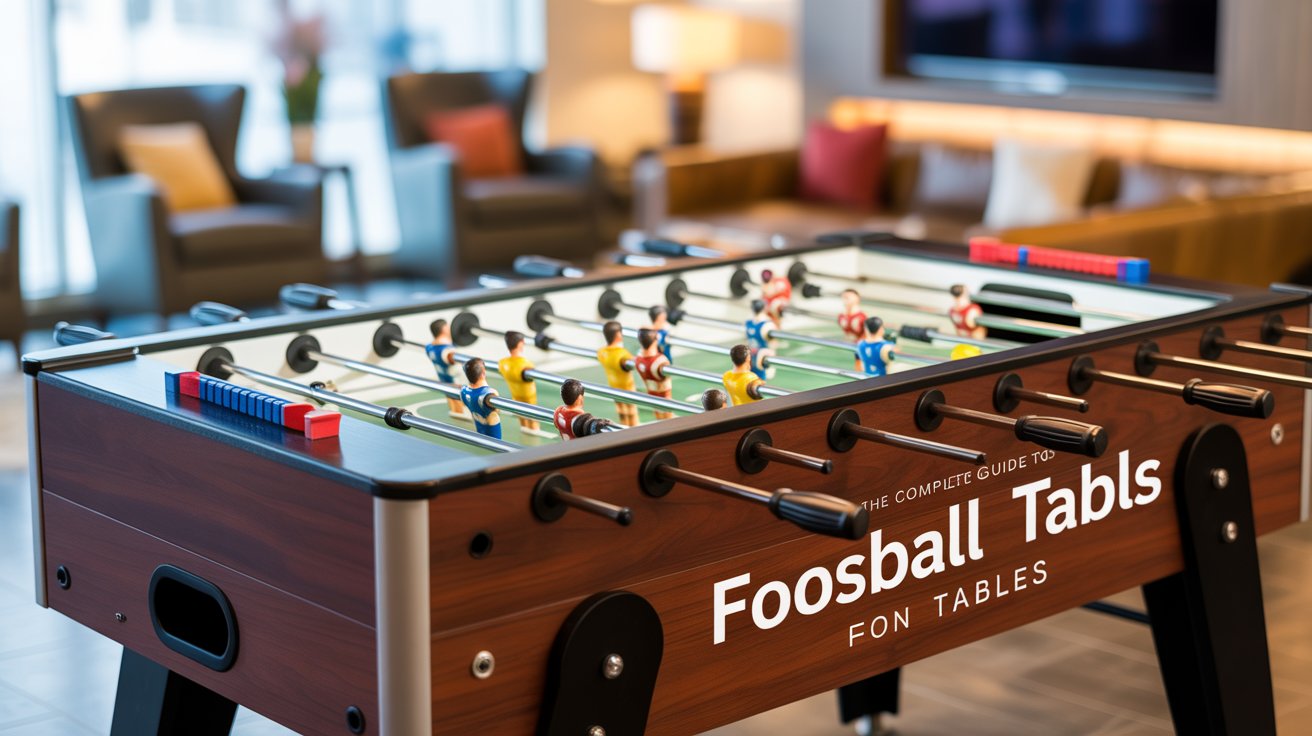
The standard arrangement in competitive play is 1 goalie, 2 defenders, 5 midfielders, and 3 forwards. But depending on the table type (single or triple goalie), you might adjust your strategy.
European play often focuses on ball control and finesse, while American style leans toward power and speed.
Basic Rules Every Player Should Know
Foosball may be fun and casual, but it has its own set of rules:
-
No spinning the rods—meaning you can’t rotate them a full turn before or after striking the ball.
-
Serve by placing the ball through the side hole.
-
First to reach a predetermined score wins (commonly 5 or 10 goals).
-
Dead balls (when the ball stops out of reach) are re-served.
Techniques to Improve Your Game
Even if you’re playing for fun, learning a few moves can make matches more exciting:
-
Pull shot — sliding the rod toward yourself before delivering a swift, targeted strike.
-
Push Shot – Opposite of a pull shot, moving away from your body before shooting.
-
Snake Shot – Advanced technique involving wrist rolls for power and surprise.
-
Passing Game – Using midfielders to control and pass before shooting.
Think of these moves like a chess strategy—sometimes the best play is two steps ahead.
Setting Up a Foosball Table
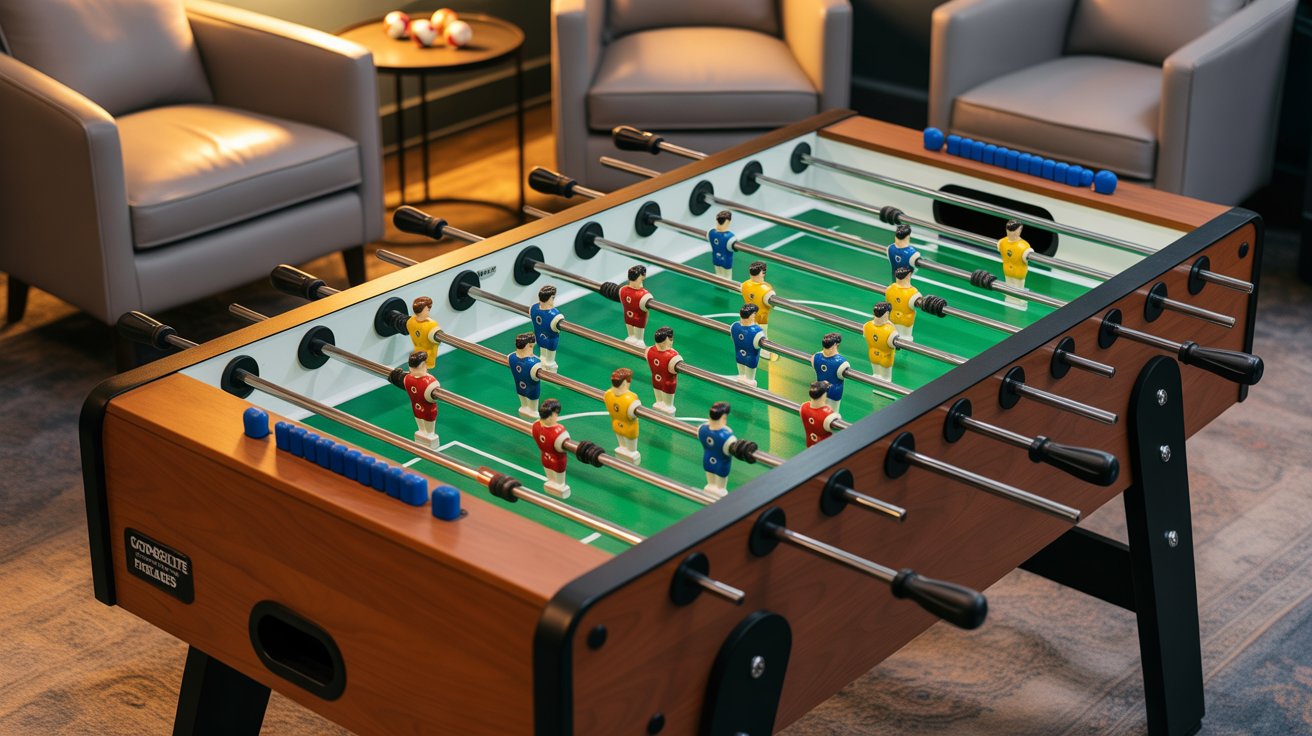
If your table arrives in a box, you’ll need to assemble it:
-
Attach the legs to the cabinet.
-
Install the rods in the correct order (goalies to forwards).
-
Attach the players to the rods and lock them firmly in place using pins or screws.
-
Level the table for fair play.
-
Drop in the balls and check that the rods glide effortlessly for smooth, responsive play.
Maintenance Tips for Long-Lasting Play
With proper upkeep, a foosball table can deliver decades of smooth, reliable play:
-
Clean the surface regularly with a dry cloth.
-
Lubricate the rods with silicone spray (never oil).
-
Tighten bolts to keep parts stable.
-
Cover the table when not in use to protect from dust and spills.
Foosball as a Social Game
Beyond the mechanics, foosball is about connection. It’s a quick icebreaker at parties, a friendly competition in offices, and a timeless game that bridges generations. Like a campfire, it draws people in and keeps them engaged.
Buying Guide: What to Look For
When shopping, consider:
-
Budget – Entry-level tables start around $100, while pro-grade models can exceed $2,000.
-
Space – Ensure you have enough room for movement on both sides.
-
Skill Level – Casual players may prefer lighter tables; competitive players need sturdier builds.
-
Brand Reputation – Brands like Tornado, Garlando, and Bonzini are respected in the foosball community.
Foosball in the Digital Age
Today, foosball hasn’t just stayed in physical form—there are also mobile apps and VR simulations. Still, nothing matches the satisfying clink of a real goal scored on a physical table.
FAQs
1. How much space do I need for a foosball table?
You should have at least 7 feet by 8 feet of space for a full-sized table to allow comfortable movement on both sides.
2. Is a standard foosball table suitable for kids?
Yes, but smaller tabletop versions are often more comfortable and safer for younger players.
3. How do I clean a foosball table properly?
Use a dry or slightly damp cloth for the surface and silicone spray for the rods. Avoid harsh chemicals and oils.
4. Is spinning the rods really against the rules?
Yes—in official play, spinning is considered illegal because it removes skill from the game and can damage the table.
5. What’s the lifespan of a foosball table?
With the right maintenance, a well-built foosball table can keep the games going for 10–20 years or longer.
Conclusion: More Than Just a Game
A foosball table isn’t just a piece of furniture—it’s a hub for laughter, skill-building, and memories. Whether you’re a casual player spinning rods at a friend’s house (gently, of course) or a competitor eyeing a tournament win, foosball offers something for everyone.
Remember—whether in foosball or in life, a strong offense can be your best defense.


